Are you losing local customers because your website feels like it belongs in 2015?
In the fast-paced Texas business environment, a slow, outdated website isn’t just an inconvenience—it’s a massive liability.
Whether you are running a tech startup in Austin, managing a growing e-commerce empire in Houston, or leading a corporate firm in Dallas, your digital presence is your most critical asset.
Welcome to the ultimate guide to web development in Texas for 2026.
The digital landscape is shifting rapidly, driven by artificial intelligence, mobile-first indexing, and hyper-localized user experiences.
In this comprehensive guide, we will explore the exact strategies, technologies, and design trends that top Texas businesses are using to dominate their markets.
By the end of this article, you will know exactly what it takes to build a high-performance website that not only looks stunning but converts visitors into loyal customers.
Why Austin, Houston, and Dallas are Leading the Web Dev Revolution
Texas is no longer just about oil and agriculture; it has transformed into a global technology powerhouse. The state’s unique economic climate has fostered distinct digital ecosystems in its major cities, each requiring a tailored approach to web development.
In Austin, the startup culture demands websites that are agile, scalable, and capable of handling rapid growth.
Investors and venture capitalists expect flawless user experiences (UX) and lightning-fast load times. Meanwhile, Houston’s diverse economy, heavily reliant on logistics and retail, has seen a massive surge in the need for robust e-commerce platforms.
Businesses here require secure payment gateways, advanced inventory management integrations, and mobile-first designs to capture the on-the-go consumer.
Dallas, with its strong corporate presence, prioritizes enterprise-level web applications. Security, data compliance, and seamless internal tool integrations are non-negotiable for Dallas-based firms. Understanding these regional nuances is the first step in mastering web development in Texas.
Top 5 Web Development Trends Shaping Texas Businesses in 2026
To stay competitive, Texas businesses must adopt the latest web technologies. Here are the top five trends defining the industry in 2026:
1. AI-Powered Personalization
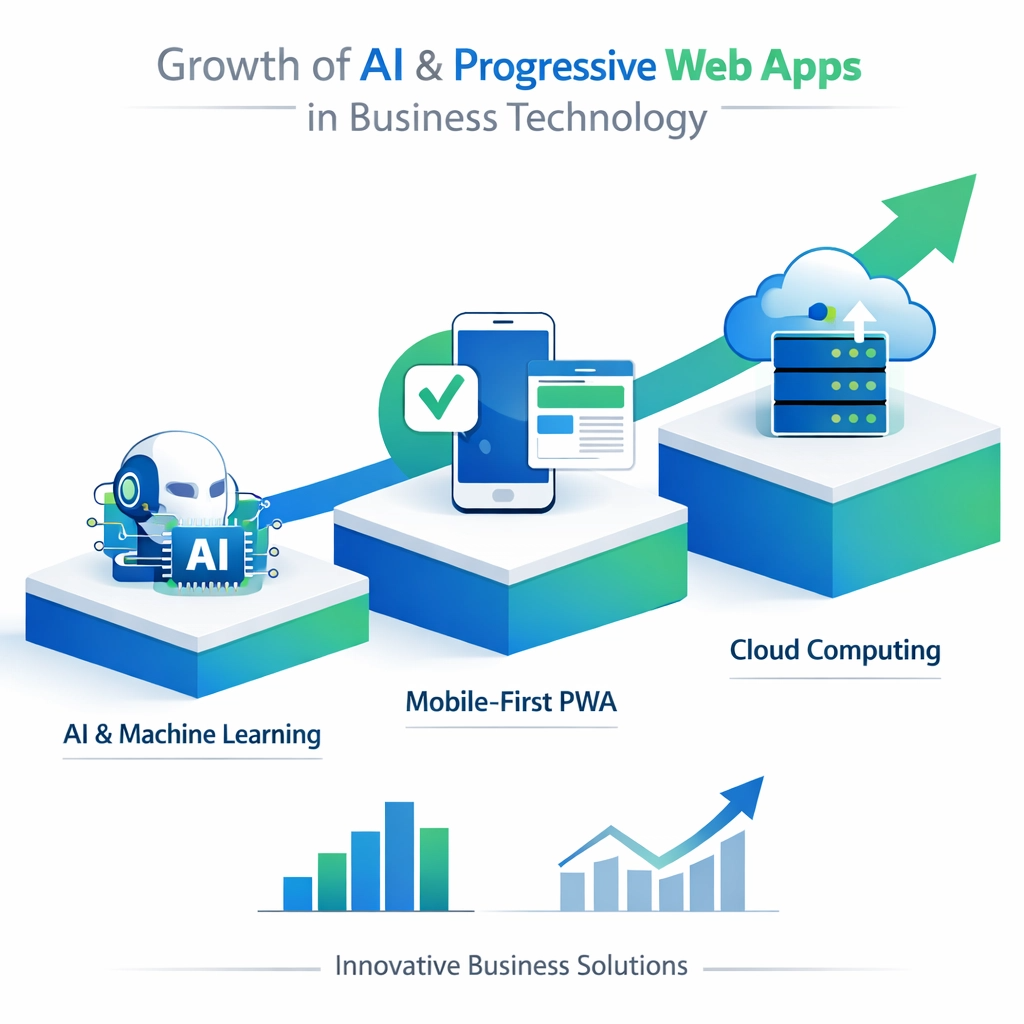
Artificial Intelligence is no longer a buzzword; it is a fundamental component of modern web development.
Texas businesses are leveraging AI to create hyper-personalized user experiences. From intelligent chatbots that handle customer service inquiries 24/7 to dynamic content that adapts based on user behavior, AI is driving higher engagement and conversion rates.
2. Progressive Web Apps (PWAs)
Progressive Web Apps combine the best of web and mobile applications. They offer offline capabilities, push notifications, and incredibly fast load times without requiring users to download an app from an app store.
For Texas businesses looking to improve mobile engagement—especially in areas with spotty internet connectivity—PWAs are a game-changer.
3. Voice Search Optimization
With the proliferation of smart speakers and voice assistants, optimizing for voice search is critical.
Texans are increasingly using conversational queries to find local services. Web developers must structure content to answer specific questions directly, utilizing natural language processing (NLP) techniques to capture this growing segment of search traffic.
4. Dark Mode and Minimalist UI
User interface (UI) design in 2026 leans heavily toward minimalism and dark mode options. Not only does dark mode reduce eye strain for users browsing late at night, but it also saves battery life on OLED screens. Clean, uncluttered layouts with bold typography ensure that the core message is delivered without distraction.
5. Sustainable and Green Web Hosting
As environmental awareness grows, so does the demand for sustainable web practices. Texas businesses are increasingly opting for green hosting providers that use renewable energy. Furthermore, developers are writing cleaner, more efficient code to reduce the carbon footprint of data transfers, aligning digital strategies with corporate social responsibility goals.
How Localized Design and SEO Drive Texas Traffic
Building a beautiful website is only half the battle; ensuring that your target audience can find it is equally important. Local SEO is the lifeblood of service-based businesses in Texas.
When executing web development in Texas, integrating local SEO from the ground up is essential. This means optimizing your site architecture for location-based keywords, ensuring your Google Business Profile is perfectly synced with your website data, and implementing schema markup to help search engines understand your geographic relevance.
Furthermore, localized design elements—such as incorporating subtle nods to Texan culture or using imagery that resonates with the local demographic—can significantly boost user trust and engagement. A website that feels authentically “Texan” will always outperform a generic, cookie-cutter template.
Tailored Web Strategies for Texas Startups, E-commerce, and Corporate Firms
A one-size-fits-all approach does not work in a state as diverse as Texas. Your web development strategy must align with your specific industry and business model.
For startups, the focus should be on creating a “VC-ready” digital presence. This involves a clear value proposition, seamless navigation, and a robust backend architecture that can scale as the user base grows.
E-commerce businesses, particularly those in Houston and San Antonio, must prioritize the mobile shopping experience. Frictionless checkout processes, high-quality product imagery, and personalized product recommendations are key drivers of revenue.
Corporate firms in Dallas and Fort Worth require enterprise-grade solutions. This includes custom web applications for internal operations, stringent cybersecurity measures to protect sensitive data, and integrations with existing CRM and ERP systems.
How to Hire the Right Texas Web Developer in 2026
Choosing the right partner for your web development project is a critical decision. You need an agency that understands both the technical requirements and the local market dynamics.
When evaluating potential web developers in Texas, look beyond their portfolio. Ask about their approach to SEO, their experience with modern frameworks like React or Next.js, and their post-launch support services.
A true partner will not just build a website; they will build a digital growth engine. Ensure they have a proven track record of delivering projects on time and within budget, and don’t hesitate to ask for case studies or client references.
Ready to scale your business? Hire a Web Developer in Texas today and transform your digital presence.
Real-World Success: How Texas Brands are Winning Online
Consider the case of a mid-sized logistics company in Houston. By transitioning from a legacy CMS to a custom-built Progressive Web App, they reduced their mobile bounce rate by 40% and increased online quote requests by 25%.
The new platform allowed their drivers to access critical routing information offline, significantly improving operational efficiency.
Similarly, an Austin-based SaaS startup partnered with a local web development agency to overhaul their marketing site.
By implementing AI-driven content recommendations and optimizing their site architecture for technical SEO, they saw a 150% increase in organic traffic within six months, directly leading to a successful Series A funding round. These examples highlight the tangible business impact of strategic web development.
Frequently Asked Questions (FAQ)
Q: How much does custom web development in Texas cost in 2026?
A: Costs vary widely based on complexity. A basic business site might start around $5,000, while custom web applications or advanced e-commerce platforms can range from $20,000 to $100,000+. It is an investment in your digital infrastructure.
Q: Why is mobile-first design so important for Texas businesses?
A: Over 60% of web traffic now comes from mobile devices. Google uses mobile-first indexing, meaning it ranks your site based on its mobile version. If your site isn’t optimized for smartphones, you are losing visibility and customers.
Q: What is the difference between web design and web development?
A: Web design focuses on the visual aesthetics and user interface (UI/UX), while web development involves the coding and programming (HTML, CSS, JavaScript, backend databases) that make the website function.
Q: How long does it take to build a custom website?
A: A standard custom website typically takes 8 to 12 weeks from discovery to launch. Complex web applications or large e-commerce sites may take 4 to 6 months to ensure rigorous testing and security compliance.
Q: Do I need ongoing maintenance after my website launches?
A: Yes. The digital landscape evolves constantly. Ongoing maintenance ensures your site remains secure against vulnerabilities, software is updated, and performance is optimized for new SEO algorithms.
Q: What is web development?
A: Web development is the process of building, programming, and maintaining websites and web applications. It encompasses everything from creating plain text pages to developing complex e-commerce platforms and social networks, ensuring optimal performance, user experience, and speed.
Q: How to choose a web developer in Texas?
A: To choose the best web developer in Texas, evaluate their portfolio for industry relevance, check client reviews, and ensure they have expertise in modern frameworks (like React) and local SEO. A reliable agency will offer transparent pricing and post-launch support.
Conclusion: Your Roadmap to Digital Dominance in Texas
The digital frontier in Texas is highly competitive, but it is also ripe with opportunity. By embracing modern web development trends, prioritizing local SEO, and partnering with the right experts, you can build a digital presence that not only survives but thrives in 2026.
Don’t let an outdated website hold your business back. The time to invest in high-performance web development is now. Whether you need a complete redesign, a custom web application, or an e-commerce overhaul, taking action today will secure your competitive advantage for years to come.